
Roof fit
Check your roof fit.
Check the exterior gap between the louver ends and fixed beam support. Blade-end shape, spacing, and the roof’s complete movement determine what needs to be reviewed.
Which roof are you working with?
Check the blade ends and fixed support.
Use the standard Pivot 6 as a starting point for review. Compare the blade-end shape, spacing, exterior gap, and fixed beam support with the proposed foam closure. Confirm the short scalloped top follows the louver ends while the block rests on the support. The model name alone does not confirm fit.
In every case, check the full opening and closing travel, drainage paths, seals, and operating hardware. A visual match is a starting point for review.
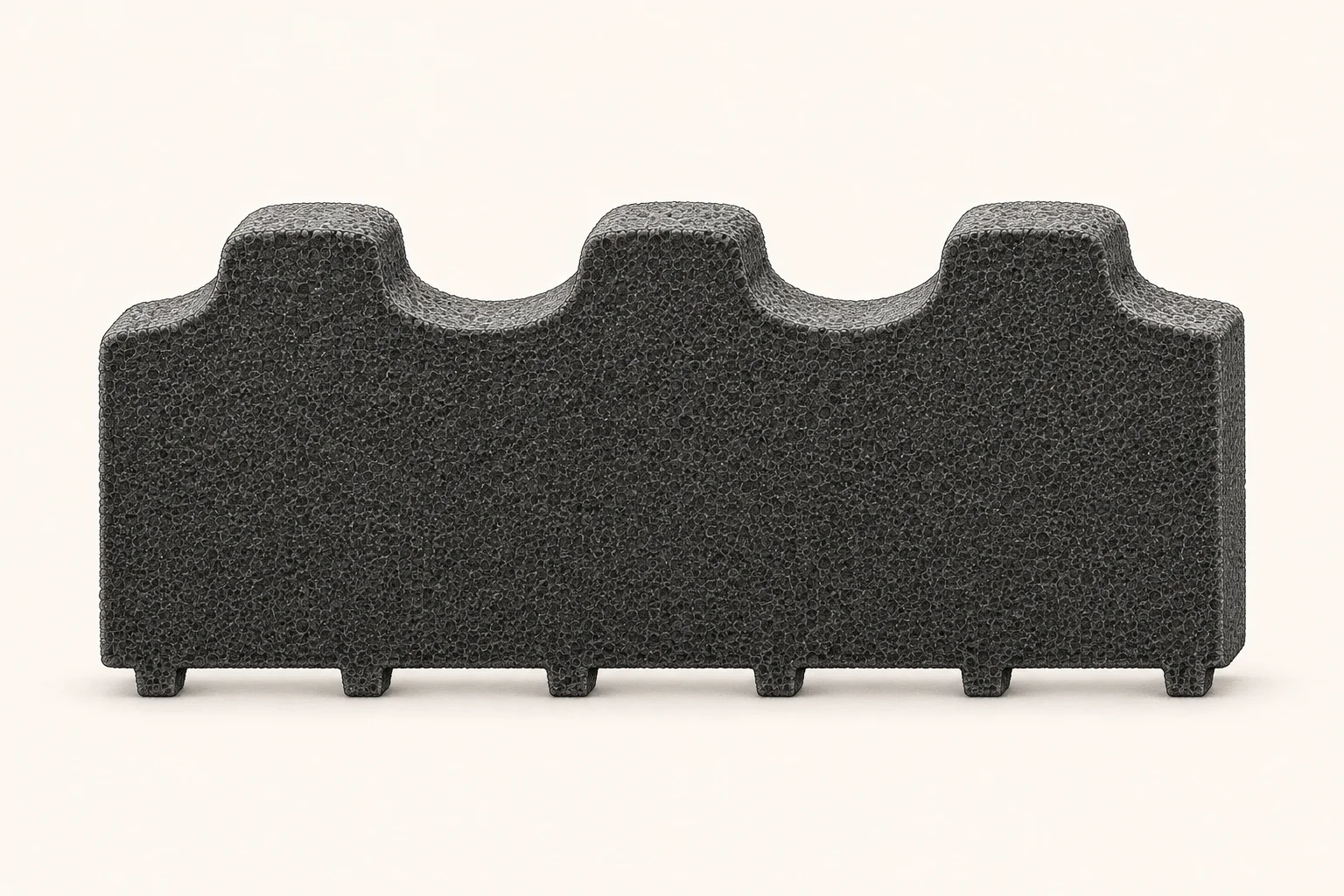
Blade ends and support.
Confirm the manufacturer, exact model, blade type, and available drawings. Compare the blade-end shape, spacing, exterior gap, and fixed support with the proposed closure.
The short scalloped top follows the louver ends. The block rests on the fixed beam support. Photos and measured dimensions should show both parts of that relationship.
Movement and drainage.
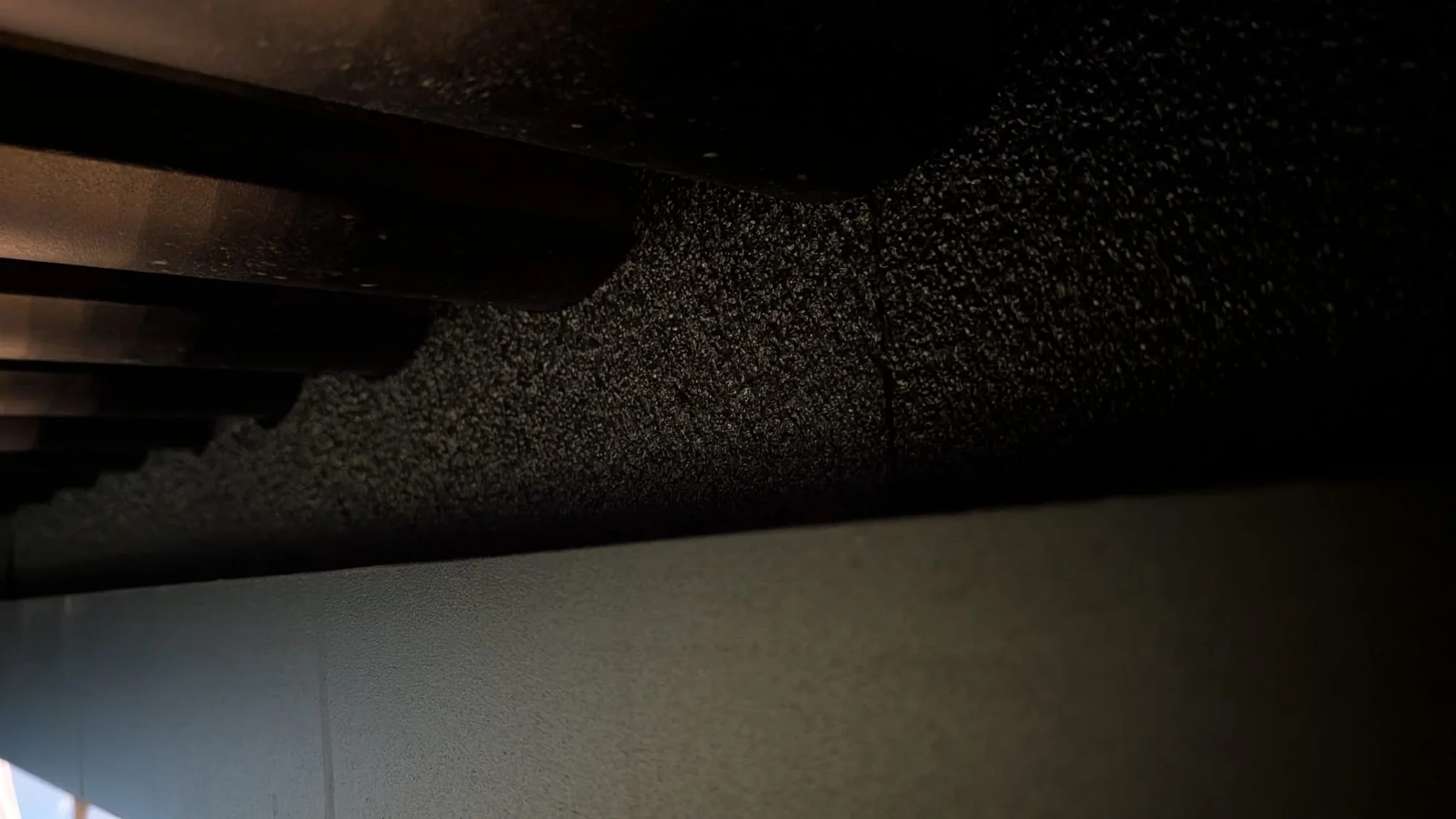
Show how the blade ends move past the stationary foam closure. Capture nearby seals, gutters, and hardware, and assess side edges separately.
Check clearances through the roof’s full travel. Slide systems also translate, so review that movement as well as rotation. Keep drainage paths open and assess access for operation and maintenance.
Prepare a dealer fit review.
- Identify the system. Record the manufacturer, frame configuration, blade type, and model. Include available drawings.
- Show the closure location. Photograph the blade ends, exterior gap, and fixed beam support. Include measured dimensions and spacing.
- Show the movement. Include open and closed views, nearby hardware, seals, drainage routes, and any translating travel. Photograph side edges separately.
Use safe, accessible positions for photos. Note modifications or differences from the standard system so we can review the actual roof together.
Fit questions.
Does a standard Pivot 6 automatically qualify?
No. It is a starting point for review. Blade-end geometry, fixed support, hardware, drainage, and full operating travel still need to be checked.
Does XL identify the blade fit?
No. XL identifies a frame and gutter configuration. Confirm the actual blade type. Flat/MAX blades and Cabana need their own fit review, and Slide systems require checks through translating travel.
What if I cannot identify my roof?
Start with installation paperwork, labels, and drawings. Prepare overall and detail photos so we can identify the system and the dimensions needed before a fit decision.
Bring RSECT a roof to review.
Prepare the roof identification, blade-end and support measurements, and open and closed photos for a fit review.