
How it works
Where the insert fits.
RSECT is an exterior foam closure at the blade ends. It rests on a fixed beam support, closing the gap between that support and the louver ends.
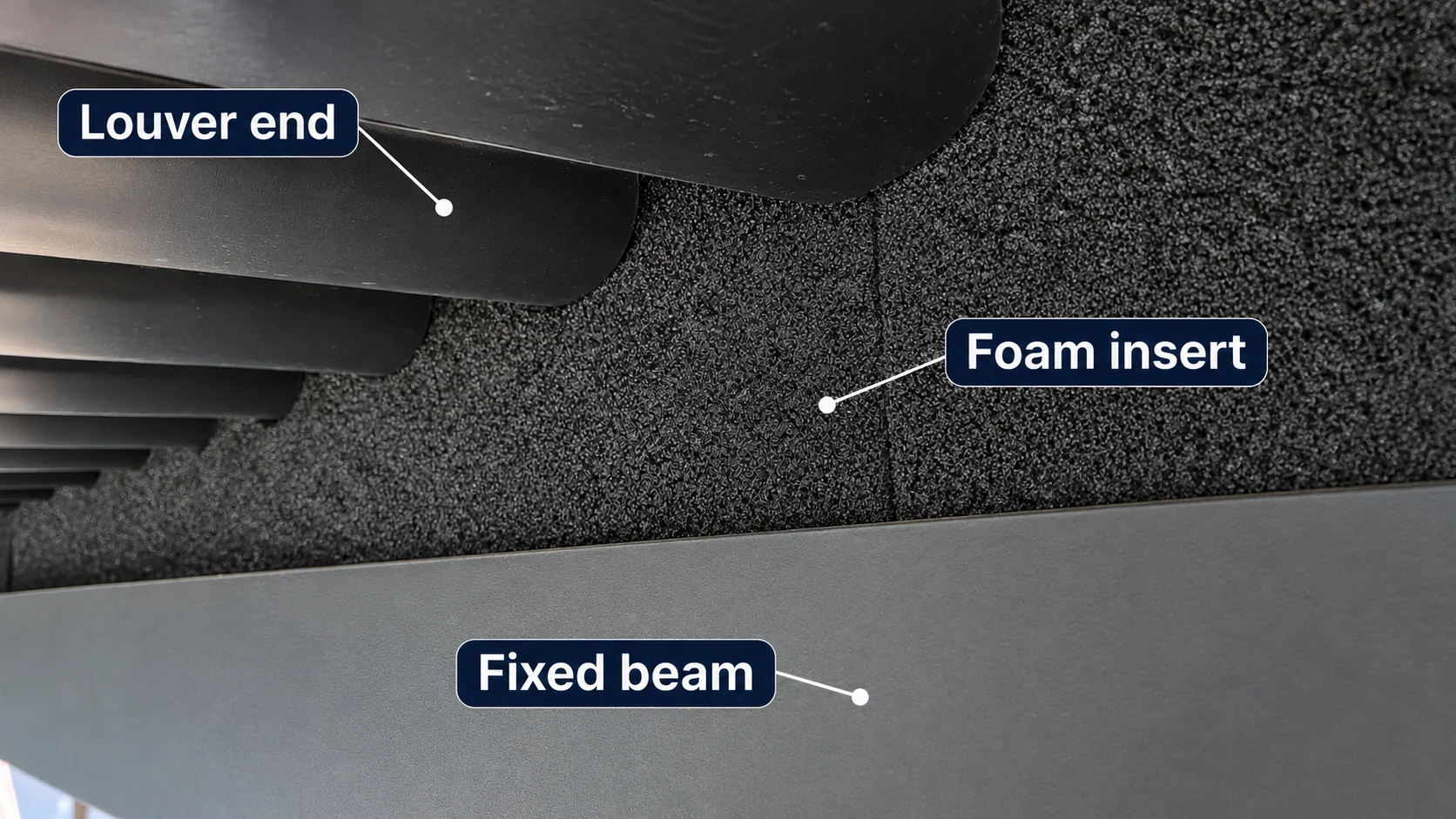
At the louver ends.
The short scalloped top follows the shape of the louver ends. The foam block rests on a fixed beam support and remains stationary as the blades move.
Review the exterior gap, blade-end profile, spacing, and support together. The closure must work with the roof’s full movement, drainage, seals, and hardware. Side edges require separate assessment.
Check roof fitPilot observations.
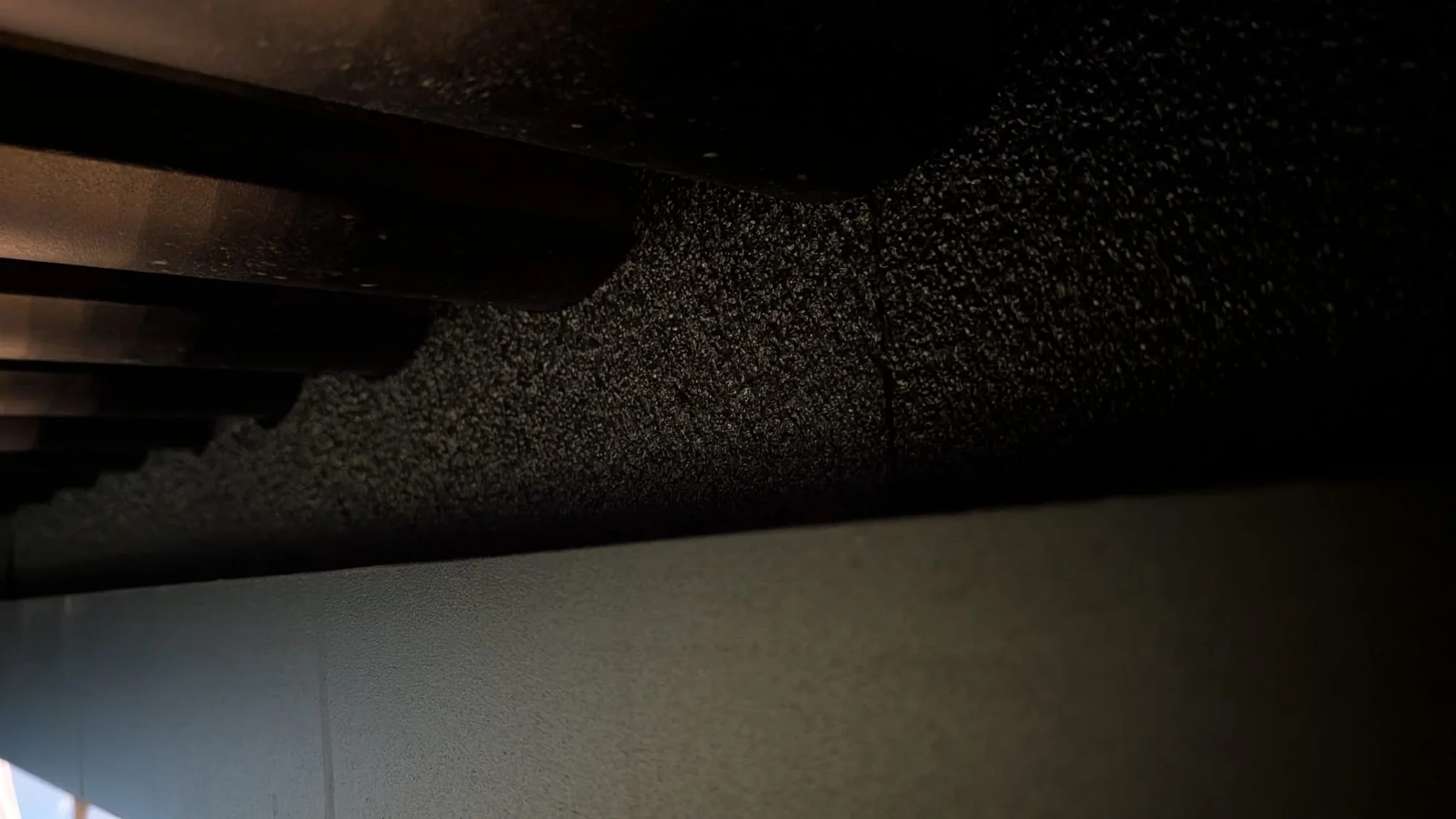
Look just above the smooth beam in the field photo. The textured strip follows the repeating ends of the blades.
In one pilot installation, visible daylight at the blade ends disappeared where the foam was fitted. The inserts stayed seated during the movement observed, with no rubbing seen.
The installer recorded a visible change at that edge. The site’s heating and cooling energy use was not measured before and after fitting.
Enclosed patios
Where heating and cooling come in.
With the roof and sides closed, warm air can escape a heated patio through gaps at the louver ends. Outside air can also enter an air-conditioned space. The insert is designed to reduce that exchange at the fitted edge. If the equipment runs less to hold the same temperature, it can use less energy.
For open-sided or screened patios, show your customer the edge detail. A bill-saving estimate needs measurements from an actively conditioned enclosure.
Common questions.
Where does the foam sit?
The foam closure sits between the louver ends and a fixed beam support. Its scalloped top follows the blade ends, while the block rests on the support. It stays stationary as the blades move.
Will the roof still open and drain?
Full opening and closing travel, drainage routes, seals, and hardware must be checked with the proposed insert in place. Include those checks in the review of each roof.
Will it reduce energy use?
Energy use is relevant only when the space is enclosed and actively heated or cooled. Even then, any effect depends on the complete enclosure, air leakage, operating conditions, and installation. No measured savings figure is available for the pilot.
What do the photos demonstrate?
The field photos show a particular installation and its details. The illustrations explain the concept. Neither is a substitute for a measured fit assessment or a controlled performance test.
Check your roof fit.
Identify the blade ends, fixed support, and movement before selecting a closure.